


What is xG in football (and L15)?
5 min read · InstagramxG (expected goals) measures chance quality; L15 estimates pressure over the next 15 minutes. What they mean and how to read them together.
xG, or expected goals, measures the quality of the chances a team creates: the better the chances, the higher the xG. L15 is a CornerPro indicator that estimates each team's attacking pressure over the next 15 minutes, so xG looks at what has already happened and L15 looks at what is coming.
This guide explains what each one means, how to read an xG figure, how it differs from L15 and how to use both during a match.
What is xG in football?
xG gives every chance a value based on how likely it is to be scored. A tap-in from six yards is worth a lot; a speculative shot from wide and far out is worth very little. Add up the value of all a team's chances and you get its xG for the match.
Its use is seeing past the scoreline. A team can be losing while creating clear chances; another can be winning after doing very little going forward. xG helps you check whether the result reflects what is happening on the pitch.
xG meaning: what does 1.8 xG tell you?
An xG of 1.8 means that, given the quality of the chances created, an average team would have scored around 1.8 goals from those same opportunities. It does not mean the team "should" have scored two, nor that it will score two next time.
Three points for reading it properly:
- High xG from few shots points to very clear chances.
- Low xG from many shots points to volume without danger: long-range efforts and forced attempts.
- High xG with no goals can be poor finishing, a good goalkeeper or plain luck. In a single match, luck carries a lot of weight.
What is xGOT?
xGOT (expected goals on target) measures the quality of a shot once it is heading between the posts: it accounts for where the ball is going in the goal, not only where it was struck from. CornerPro does not show xGOT; it shows xG and L15, which answer a different question: who is creating chances and who is about to press.
What is L15?
L15 is CornerPro's own indicator for the expected attacking pressure of each team over the next 15 minutes. The higher the value, the stronger the pressure signal.
In practice:
- High L15 for one team: more attacking intent from that side.
- High L15 for both teams: a match that is likely to open up.
- Low L15 for both teams: a match that is likely to stay closed.
What is the difference between xG and L15?
- xG: the quality of chances already created.
- L15: the expected attacking pressure over the next 15 minutes.
They complement each other. A team can have a high xG from the chances it has already made and, at the same time, a high L15 showing the pressure is continuing. At other times they tell different stories: a team with good xG from the first half hour that has faded and now shows a low L15. That is why neither should be read on its own.
Real example: Cruzeiro vs Flamengo (Brasileirão)
In the closing minutes of a Cruzeiro vs Flamengo match in the 2026 Brasileirão, Cruzeiro's L15 stood at 0.85, a strong signal of attacking pressure for the minutes ahead. Cruzeiro scored in the 95th minute (90+5).
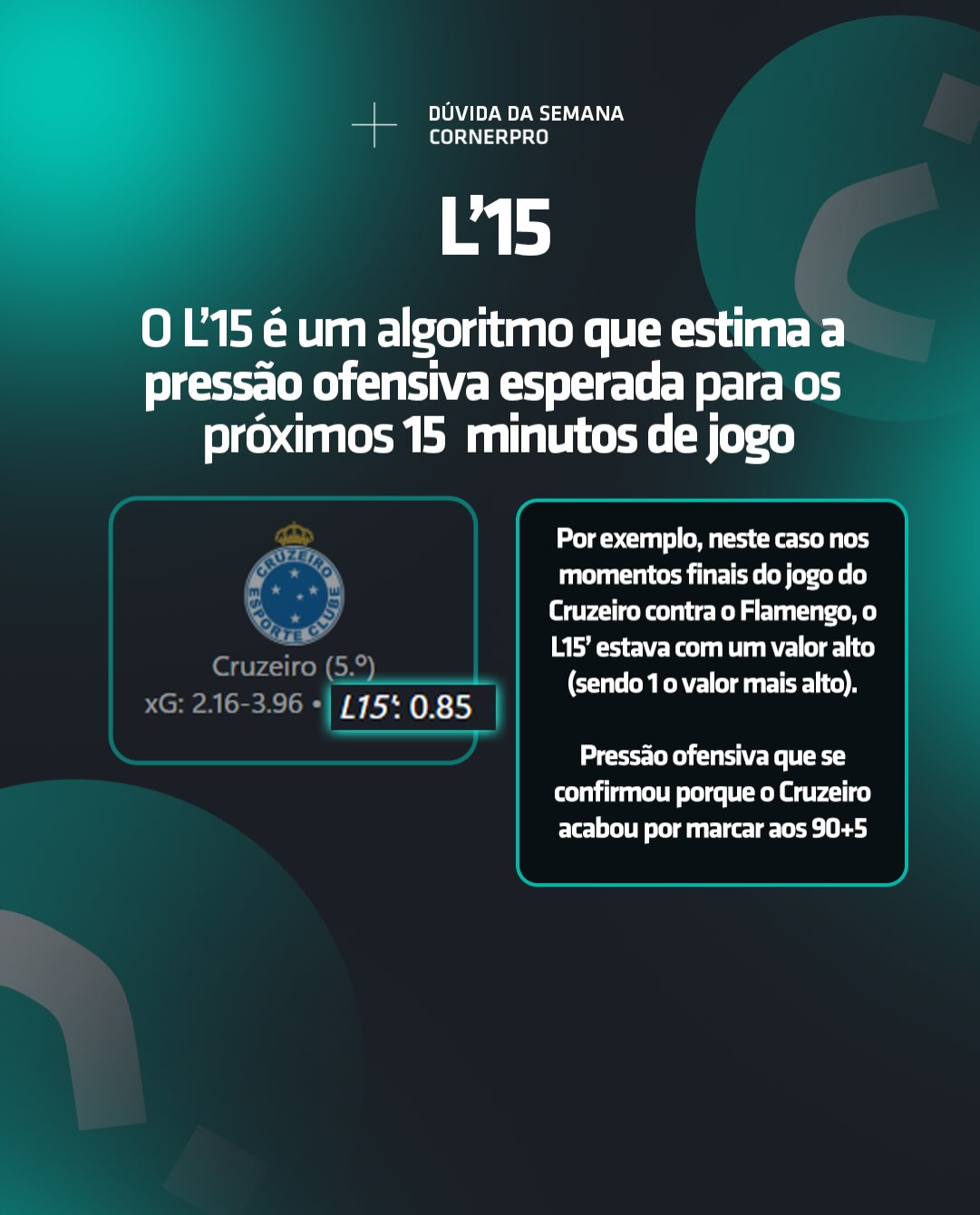
The example shows how the indicator is used, not a rule. A high L15 does not mean a goal will come. It means the match was tilting one way, and that it was worth checking the pressure graph and the shots to confirm it.
How to see xG live
On CornerPro, xG and L15 appear in the Live tab of each match page, alongside shots, the Pressure Graph and the Heat Map. You can also use them as criteria when you build a bot: xG, xG for the main leagues (xGI) and L15 (xGL), so you get an alert when a match fits the scenario you are looking for.
Frequently asked questions
Is xG a guarantee of goals? No. It measures chance quality, not the outcome. A team can finish a match with 2.5 xG and no goals.
Why does the team with more xG sometimes lose? Because in one match finishing, the opposing goalkeeper and luck all matter. xG explains performance over many matches better than over one.
Does L15 predict goals? No. It estimates expected pressure. Pressure improves the odds of a goal, but does not turn chances into goals.
Which indicator should I check first? It depends on the question. To know who has played better, xG. To know who might push in the next few minutes, L15.
Related tutorials
A team has a high xG from the chances it has already created and, at the same time, a high L15. What is the most accurate conclusion?
Answer to mark this tutorial as done.